Day recreation is constantly evolving. This sector is also fully responding to social and technological trends. At Red Online Marketing, Joyce Dijkstra, a marketer with a special passion for day attractions, explains these trends.
The 6 day attraction trends for 2026:
- Geopolitical uncertainty forces diversification and new markets
- Family Entertainment Centers and short local outings
- Digital transformation and AI as a new foundation
- Immersion and fusion attractions: boundaries blur, experience deepens
- More indoor attractions due to more extreme weather and the need for certainty
- Season extension and the importance of events
1. Geopolitical uncertainty forces diversification and new markets
The current geopolitical situation will remain a structural factor for the attractions industry in 2026. Low economic growth in Europe, inflation, trade restrictions, and more than 100 active conflict zones are creating uncertainty for both visitors and investors. International travel flows are less predictable, and consumers are becoming more cautious in their spending. At the same time, the need for relaxation remains, especially close to home.
Major international players are responding by diversifying their risks and actively entering new markets. Disney's announced expansion into Abu Dhabi and Universal's plans for the United Kingdom demonstrate that growth is being sought in regions with economic potential. For day attractions, this means that reliance on a single market or target group is risky. Regional focus, repeat visits, and market diversification are becoming crucial for remaining resilient in an unstable world.
2. Family Entertainment Centers and short local outings
By 2026, the demand for short, local leisure experiences will grow significantly. Family Entertainment Centers (FECs) (such as bowling, mini golf, darts, arcades, VR, and quiz concepts) cater to the need for social, flexible, and accessible entertainment, often combined with F&B or where F&B plays a key or minor role. At the same time, local indoor playgrounds and smaller local attractions are becoming more popular because they require less planning and don't require a full day out.
This trend also aligns directly with shopping as a recreational destination : shopping centers, garden centers, and home furnishing boulevards are integrating play areas, hospitality, and entertainment to extend the stay. The boundary between retail and leisure is blurring ever further. Let's be honest, who doesn't view a visit to the garden center during Christmas as an outing? For traditional day attractions, this means that competition is increasingly often literally just around the corner.
3. Digital transformation and AI as a new foundation
By 2026, digital technology and AI will be a structural solution for efficiency, cost control, and guest comfort. AI will be used for crowd management, visitor flow analysis, capacity planning, and predictive maintenance. This will help parks manage staffing, infrastructure, and peak demand more intelligently.
On the guest side, the importance of digital convenience experiences is growing. Contactless entry via face-pass or QR code, mobile tickets, mobile ordering, self-scanning, and cashierless stores reduce wait times and increase throughput. At the same time, data and AI enable personalized visitor guidance, with real-time recommendations for attractions, restaurants, and routes. This not only makes the experience smoother but also more relevant to the individual. In the future, we also expect AI in attractions for a more personalized and immersive experience.
4. Immersion and fusion attractions: boundaries blur, experience deepens
By 2026, immersion will evolve further towards fusion attractions, where different forms of entertainment merge into a single experience. The traditional boundaries between attractions, theater, gaming, hospitality, sports, and culture will blur. Visitors will no longer seek individual attractions, but cohesive worlds of experience. Historic castles will become interactive experiences, water parks will become light and media spectacles in the evening, and sports activities will be enhanced with attraction technology and storytelling.
Within this trend, active participation is central. Visitors want to participate, have influence, and be part of the story. Interactive theater, role-playing formats, and social gaming for adults are gaining ground. Digital technologies like VR and MR enhance these experiences, but always as part of the story, not as an end in itself.
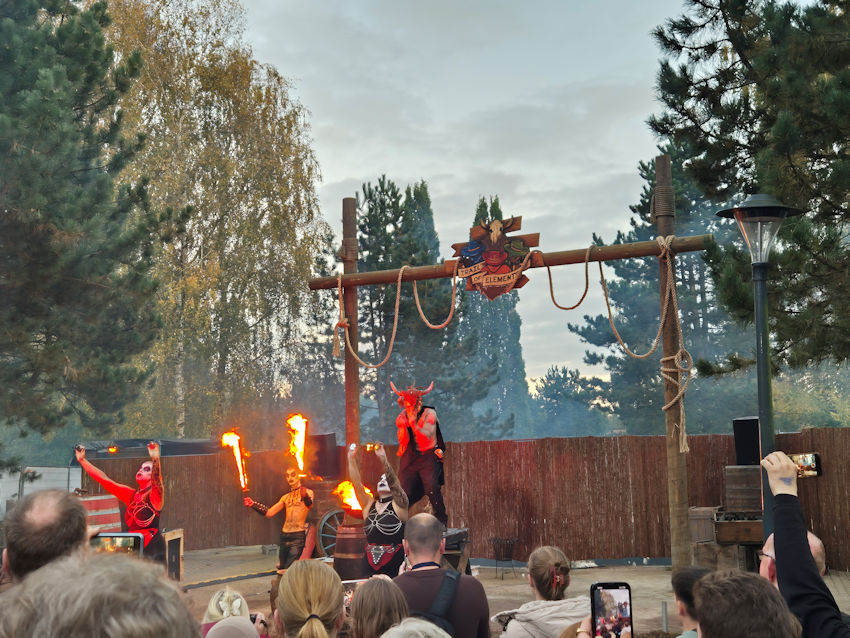
The thematic scope is also expanding. Horror is evolving from a seasonal event to a permanent leisure product with a mature, loyal audience. Simultaneously, demand is growing for opposites like wellbeing and wellness experiences, which focus on relaxation and mental health. Immersive dining connects these worlds by making food and drink part of the story and appealing to multiple senses.
5. More indoor attractions due to more extreme weather and the need for certainty
Climate change is also driving a clear shift toward more indoor attractions. Extreme weather, heat waves, heavy rain, and unpredictable seasons are making outdoor visits less reliable. Visitors are seeking comfort, security, and continuity. Indoor attractions, indoor play concepts, and hybrid indoor-outdoor models offer that predictability.
For day attractions, this means that indoor facilities aren't just a weather-adaptive solution, but also a strategic advantage: year-round operation, more stable revenue, and less dependence on external factors. This trend reinforces the growth of indoor playgrounds, FECs, and compact leisure concepts, but also impacts larger day attractions, which are increasingly redesigning their offerings to adapt to climate change or expanding them with indoor attractions.
6. Season extension and the importance of events
By 2026, the classic amusement park season will increasingly blur. While daytime attractions traditionally had distinct peak and low seasons, winter events, in particular, are making parks increasingly relevant year-round. Light festivals, Christmas markets, winter theming, and evening openings make parks attractive in months that were previously considered low season. Visitors in winter are less interested in spectacle and more in atmosphere, warmth, and togetherness. This blurs the traditional lines between summer and winter seasons.
Halloween is increasingly developing into a full-fledged season with multiple layers: from family-friendly daytime activities to intense horror experiences in the evening, aimed at an adult audience. We can now call Halloween the second peak season. Furthermore, these events help increase repeat visits. For example, someone who attended the Halloween event might choose to visit the winter event the following year, or even the same year.
This development goes hand in hand with the rise of afternoon or evening tickets. More and more attractions offer specific tickets for the evening hours, aimed at visitors who don't want to spend a full day there, but are still interested in the atmosphere, entertainment, food and drink, and events. Evening tickets lower the barrier to entry, enable flexible pricing strategies, and appeal to new target groups.
With thanks to (author of this article): Joyce Dijkstra, marketer at Red Online Marketing