Small hotels win on charm and character, but their working methods are often rigid. International unrest and looming cost increases call for a business model that adapts to market shocks. Entrepreneurs who are able to make a portion of their fixed costs flexible significantly increase their chances of survival.
The wave is coming. Inflation impacting energy, procurement, and wages. The VAT increase effective January 1, 2026, which puts direct pressure on margins. Geopolitical tensions making international travel more erratic. For the entire hotel industry, this is a strong headwind. For smaller, independent hotels, it threatens to turn into a hurricane.
The difference lies in scale. Large hotel chains absorb cost increases through purchasing advantages, the ability to spread revenue across multiple streams, and the differentiation of target groups when market demand shifts. Smaller hotels and B&Bs often do not have these options. A cost increase lands faster and hits harder, and the room to maneuver is limited.
The difference in absorption capacity between large and small hotels is clearly evident from the figures. Hotels with fewer than one hundred rooms retain an average of 31 percent of their revenue before fixed costs; hotels with one hundred rooms or more reach approximately 38 percent, according to research by Horwath HTL. A difference of six to seven percentage points in what can still be spent on fixed costs seems limited, but in practice, this is the difference between a buffer and a year of balancing on the edge.
The sector knows it itself as well.
There is a widespread sense of urgency within the sector that turbulent times call for greater resilience. A joint survey by Hotel Leaders Network and ABN AMRO among 105 hotel leaders shows that a large majority places profitability and efficiency at the top of the agenda for 2026. Only 15 percent expect to be able to continue the current revenue model without adjustments.
Apparently, entrepreneurs in the sector are bracing themselves for tougher times, but the question is how smaller hotels, in particular, can increase their resilience without losing their individuality. Boutique hotels do not win on volume; they win on character, experience, and their connection with the neighborhood. Unfortunately, creating individuality is all too often translated into 'doing everything yourself': in-house housekeeping, in-house breakfast, in-house reception. That looks complete and very personal, but it also makes the organization rigid. And rigid organizations have little room for maneuver when costs, occupancy, and rates move in the wrong direction.
Flexible organizing as a survival strategy
The key lies in a cost base that is as flexible as possible: scaling up when busy, scaling down when things are tough. This does not mean cutting back on uniqueness, but designing the operation so that guests receive the same personal treatment when costs, occupancy, and rates fluctuate.
Take housekeeping: instead of employing a large permanent team, it is advisable to work with a smaller core staff and partner with a local company that adapts to occupancy. Or the reception: not a desk that needs to be manned eight hours a day, but guest support available when the guest needs it. And the breakfast or restaurant: it is better to collaborate with a bakery or eatery around the corner than to run an in-house kitchen with high fixed costs. The boutique hotel is then no longer a mini-conglomerate that has everything in-house, but more of a 'broker' that can provide services the moment its guests request them.
Such a flexible approach is perfectly feasible nowadays due to the availability of software that connects hotel systems, staff planning, and legal requirements. Platforms like Break Away Software enable smaller hotels to organize flexibly without losing operational control. Pilots show cost reductions of 30 to 50 percent on staff, and up to 70 percent on reception. Whether these results are reproducible across the sector remains to be seen in practice, but the direction is clear.
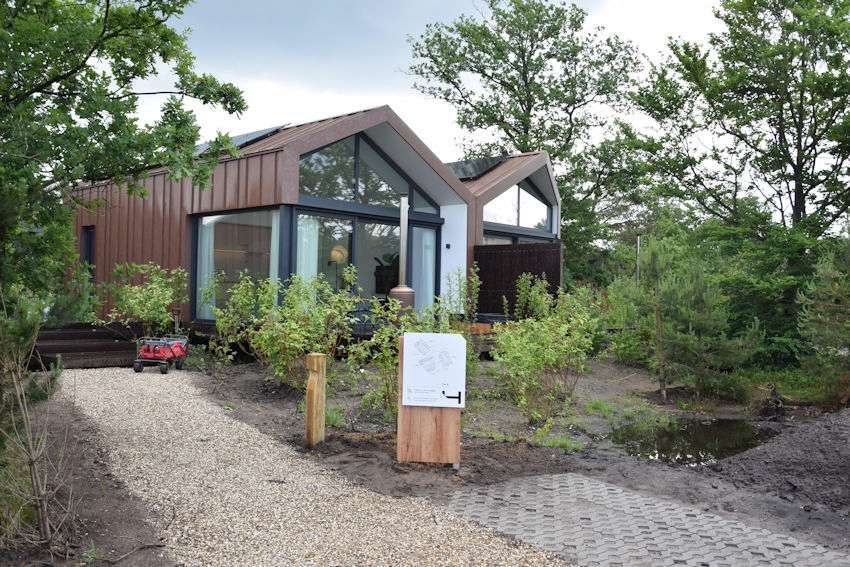
A striking case study is Marber on the Veluwe: a concept with 26 accommodations, organized around a network of local independent professionals who know the area well. Operations are centrally managed using technology, without a full-time reception or fixed staffing per position. The result is a recommendation score (NPS) of over 60 and a service level that can compete with that of much larger hotels. Small scale, therefore, proves to be no problem at all, provided things are well organized.
The divide within the sector will undoubtedly sharpen given the international unrest. Large hotels benefit from scale, stability, and financial buffers. Smaller hotels are more sensitive to negative shocks, unless they fundamentally redesign their operations. They can perfectly well maintain their unique character, provided the design is smart.
With thanks to (editor of this article) Stef Driessen, Sector Banker Leisure at ABN AMRO.
For more information: abnamro.nl/boutique-hotels-moeten-flexibel-kunnen-zijn