I go to Speelpark De Flierefluiter with my grandchildren (aged 5 to 7) a few times a year. For that age, it is ideal: plenty of active play, running, climbing, and exploring. A large amusement park is not yet 'suitable' for them; that is a different product with a different rhythm, more stimuli, and a different daily workload.
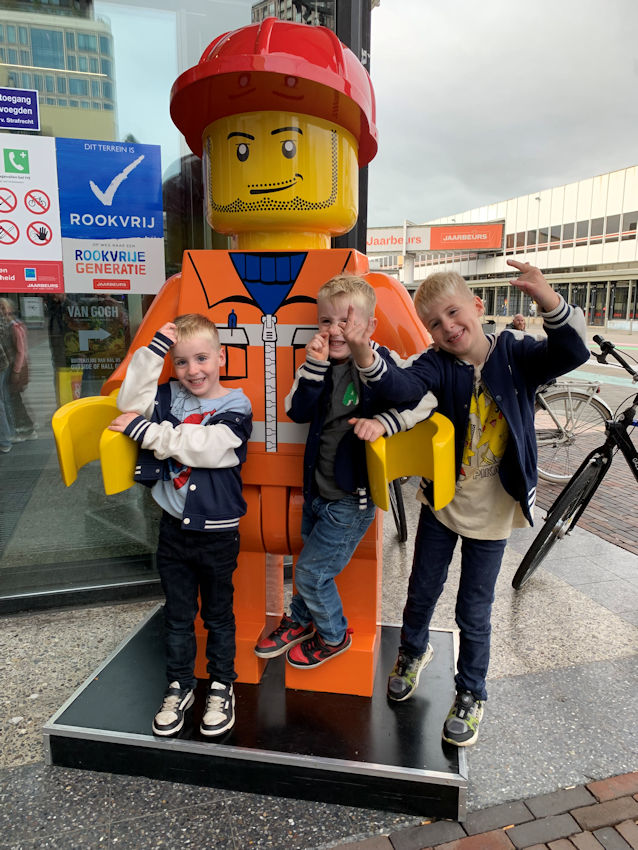
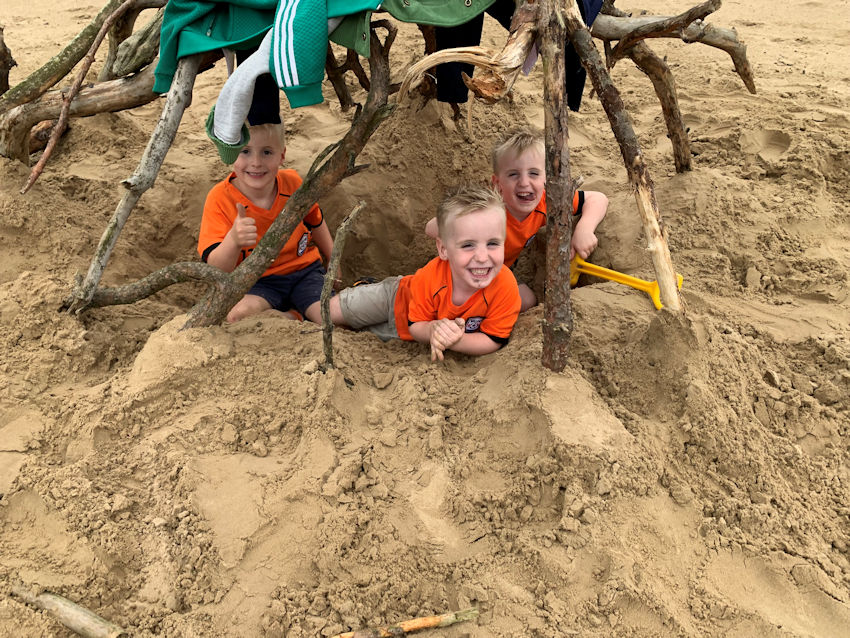
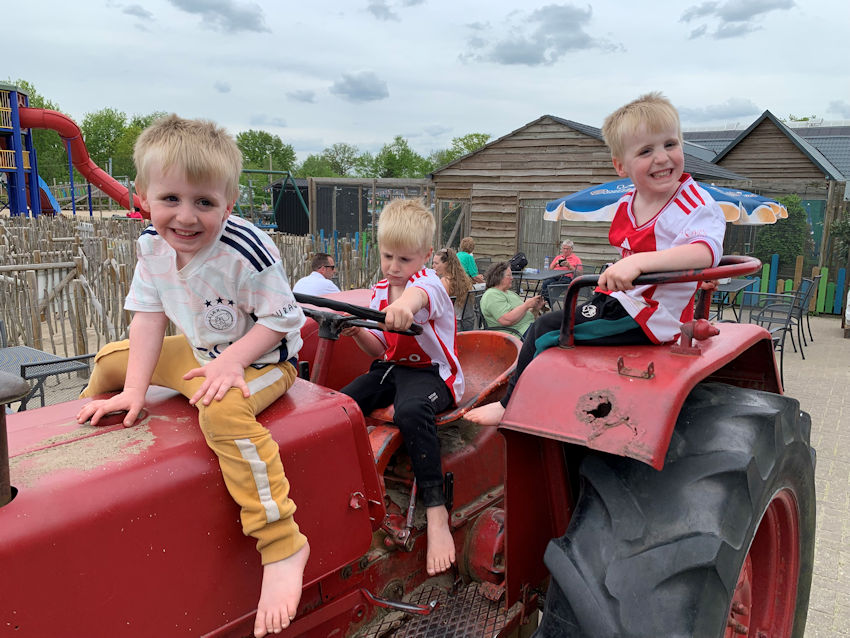
Recently, shortly after opening, we also visited Drakenrijk, an 'oversized' indoor playground. What struck me was that I paid €7,50 per ticket via dynamic pricing. Anyone who books a week in advance simply saves a few euros. The consumer is not just price-sensitive; above all, they have become price-smart.
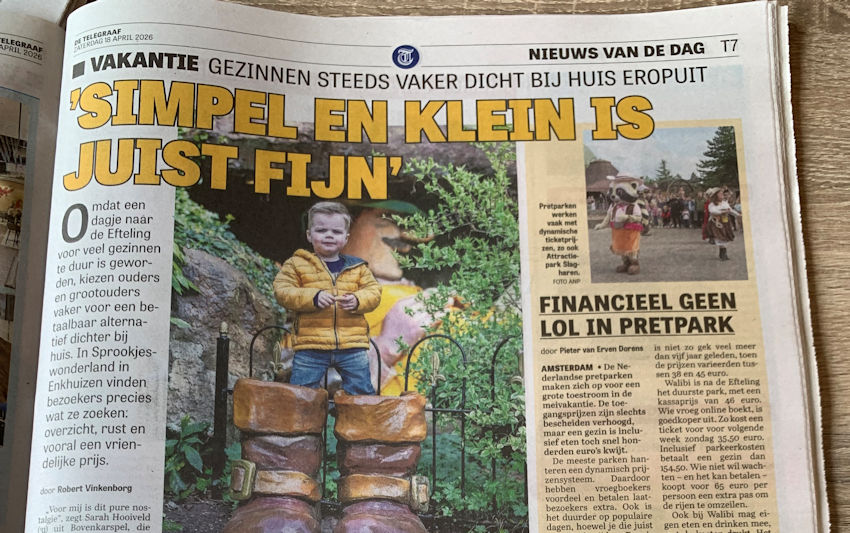
And then I read the piece in De Telegraaf: families are choosing closer to home more often because a day at Efteling is 'crowded and expensive' . In Sprookjeswonderland (Enkhuizen), parents and grandparents find exactly what they are looking for: a clear overview, peace and quiet, free parking, an annual pass, and “No surprises afterwards”.
That article touches upon a real trend. But it is also precisely the kind of framing that makes the debate about day recreation too easy.
Contrarian remark: 'expensive' is an attractive frame, but a lazy analysis
Let me be honest: 'too expensive' is a catchy headline, but as a description, it is often too simplistic. Not because families can't be struggling—that reality exists—but because we conflate three markets with a single word. This creates a false comparison that helps no one: not the consumer, and certainly not the entrepreneur who has to invest year after year in safety, maintenance, personnel, and innovation. What the media and talk shows often do is take the smallest product (small-scale, nearby, manageable) as the standard, and judge the largest product (destination with international appeal) based on that. That is like saying a restaurant is too expensive because you can cook pasta at home.
What is the definition of a day out?
The reality is: day recreation is not a uniform product. In practice, you see at least three variants:
- Local outingShort, close by, accessible. Mostly outdoors, seasonal, simple catering. Often run by volunteers, subsidies, or sponsorship. Perfect for a “quick getaway” with young children and grandparents.
- Supra-regional day attraction: Half a day to (almost) a full day. More theming, more comfort, more often indoors. Here you see price innovation: bundles, promotions, and dynamic pricing. Repeat visits are high if the barrier remains low.
- Major amusement parks as a destination: Full-fledged day-fillers, sometimes even short-break destinations with hotels and holiday parks. These players *must* innovate; the guest expects innovation, shows, theming, top attractions, a high level of quality, and capacity.
Sprookjeswonderland deliberately positions itself on clarity and accessibility: “A good product at an affordable price, without surprises afterwards”, free parking, and a target audience of 2–9 years. That is not a judgment on large amusement parks; it is a choice in proposition. And it is precisely that choice that makes them strong.
What consumers call 'expensive' is often billing stress.
What I do see: families perceive things as 'expensive' more quickly due to the accumulation of costs. Not just admission, but also parking, food and drinks, extras, travel time, and crowds. On that point, De Telegraaf makes a striking observation: people seek clarity, predictability, and peace.
And what about the entrepreneurs? They are in the same predicament. De Flierefluiter wants to be accessible—with many inclusions and a hospitable formula—but cannot avoid difficult choices. Prices have been raised and paid parking has been introduced following a substantial investment in the car park. “There was no other way.”
So yes: the consumer looks for a bargain. But the entrepreneur also seeks security of existence.
Netherlands: pronounced discount culture + joint promotions
A factor almost always missing from articles of this kind: the Netherlands has one of the most pronounced discount ecosystems surrounding days out. Supermarkets run savings and discount promotions, ANWB and NS sell outings in bundled packages, and platforms like Social Deal/Tripper and comparison websites make discounts permanently visible. This changes the frame of reference: more and more people find 'full price' a strange concept, even though that price can be substantively justified.
And then there is yet another competitor that the sector often underestimates: the free day out.
Free competition: recreational lakes and recreation boards
On warm days, day attractions compete not only with each other, but also with recreational areas. Recreational lakes managed by recreation boards and area managers draw enormous volumes. Recreational area Bussloo had around 941.000 visitors in 2024.gelderlander.nl)
That is not a “leisure category” in an amusement park’s accounting, but for the consumer, it is indeed the same choice: Are we going out today, and how much does it cost?
Dutch people often go out.
In addition, the Dutch are generally on the move a lot in their free time. The NVTO speaks of 2,5 billion leisure activities outside the home in a year.nbtc.nl)
So the question is not whether people will go out. The question is: where to, how often, and with what pricing logic?
So what can recreation entrepreneurs do?
Don't defend the fact that you are “not too expensive.” Instead, shift the focus to the added value:
- Make your product promise razor-sharp: “2 hours of play” ≠ “total entertainment,” or adjust your opening hours to the seasons and/or type of guests.
- Take control of your bill: bundles, family deals, off-peak discounts, or choose an All-in Formula.
- Design for longer stays: comfort areas, smart routing, improved seating quality, and perhaps even a multi-day package.
- Earn from repeat visits: subscriptions that offer a real benefit, or make it special for up-selling by introducing special events.
- Differentiate: young families, teenagers, fans, international guests—everyone has their own hook. So dare to choose.
- Visit www.slimmadvies.nl for bold solutions and a chance of success.
Ready to see how Snowflake works?
De Telegraaf is not telling a fairy tale—but it is a story with an overly simplistic moral. The real conclusion is: the consumer wants more control over the total bill and value for money. Nevertheless, the coming years of structural autonomous growth will level off somewhat. Entrepreneurs who manage this effectively will win—regardless of whether you are “small and simple” or “big and next level”.
With thanks to (Author): Hans van Leeuwen – SMART advice