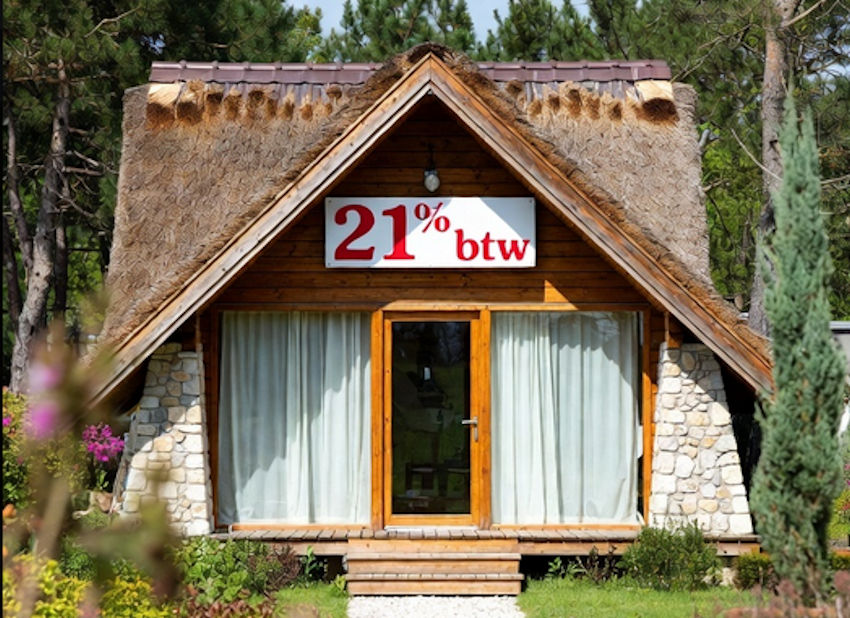
The start of 2026 marks a clear shift in the trend for Dutch hotels and holiday parks. The increase in the VAT rate from 9% to 21% has led to significantly increased price sensitivity among travelers. Initial signs indicate that both hotels and holiday parks are losing market share, especially in border regions.
In our opinion, it is therefore essential for the leisure sector to continue to closely monitor the figures. This will clarify whether the VAT increase will have a temporary effect on recreational businesses or whether the sector will be affected structurally. What are the potential consequences for the economic impact within municipalities? And how do recreational businesses deal with this VAT increase?
Impact on the local environment
Hotels and recreation parks don't operate in isolation: they are closely connected to their surroundings. They collaborate with local suppliers and businesses, and welcome guests who also stimulate the local economy. Think of spending in restaurants, retail, supermarkets, rental companies, garages, cultural/museums, heritage sites, and day recreation centers. This contributes to both increased prosperity and well-being in towns and villages. Public spaces also benefit, as opportunities for improvements include cycling and walking paths. The degree of influence varies by municipality, but the impact of residential tourism on the immediate surroundings is undeniable.
First signals in January 2026
The economic figures for January 2026 paint a clear picture: Dutch travelers are more price-sensitive than ever. While the desire for a getaway remains strong, destinations are shifting rapidly. Consumers are deciding to visit a different region, choose different accommodations, shorten their stay, or save on things like food and drinks during their stay. The trend of "tax optimization" is clearly visible; due to the higher Dutch VAT rate and lower rates in Germany (7%) and Belgium (6%, rising to 12% in March 2026), more and more travelers are choosing destinations just across the border.
Hotelspecials' statistics underscore this shift: the Netherlands is losing ground, with a drop in domestic bookings of no less than 20,5%. International demand is also declining: bookings from Belgium are falling by 38% and bookings from Germany by 30%. Conversely, Germany is gaining significantly in popularity as a destination, with its market share rising from 5% to over 20%. Belgian travelers are increasingly choosing Belgium itself or Germany.
The NBTC forecast also predicts a decline in growth. Domestic tourism will fall by 1%, and the growth of our inbound tourism will drop from 5,1% (2025) to 2,4%. On average, growth would then be 0,5% in 2026. Growth in tourist overnight stays has never been this low in recent decades.
Pressure on quality and investments
The sector is in a correction phase. Some businesses are absorbing the VAT increase themselves. This leads to lower margins and less room for investment—essential for maintaining quality. Recent research by Ginder shows that businesses are concerned about this. Major investments in recreation parks are being postponed; market players, developers, and investors are waiting. This trend is visible in daily practice.
How do you, as a recreational entrepreneur, deal with the VAT increase?
Ginder's advisors speak with recreational businesses daily. These conversations reveal that the VAT increase is a significant concern. Ginder receives a variety of responses and ideas on how to handle the VAT increase. The underlying goal, of course, is to maintain margins and investment capacity as much as possible.
Some practical examples of how entrepreneurs are dealing with the VAT increase:
- Phased price increase (sometimes this has already been implemented)
- Focus on reducing costs, for example through digitalization and labor savings
- Compartmentalization of services under the low VAT rate
- Seek chain formation and collaboration, where economies of scale improve operations.
- Focusing on quality and distinctiveness to become less price-dependent.
Increasing tax burden, monitoring is essential
The sector is not only affected by the national VAT increase, because at the same time, tourist taxes have been raised in many municipalities. Ultimately, the consumer pays for everything, but there is a limit to what is feasible and affordable. Therefore, it is crucial that municipalities and industry organizations, such as the Royal Dutch Hospitality Association (KHN) and Hiswa-RECRON, closely monitor these developments. This applies not only to the VAT increase, but certainly also to other increasing costs such as the tourist tax. A benchmark, for example, could be the change in demand and the origin of guests in six months (July 2026). Discussions about a structural approach to the tourist tax must be held in a timely manner.
Ginder annually calculates the economic impact of hotels and recreation parks on businesses and municipalities. This insight is now more important than ever. By closely monitoring the situation in 2026, we can gather facts and create a thorough analysis. This provides a basis for recommendations for municipalities, businesses, and the residential recreation sector as a whole.
Market analysis 2026: camping is growing, rental is under pressure
The latest analysis by the Recreational Accommodation Benchmark shows revenue growth of 10% in 2026 compared to 2025. This growth stems entirely from the camping supply. In particular, camping pitches with private sanitary facilities show an increase of 10% to 15% in the number of bookings. Rental accommodations, on the other hand, are declining in popularity. This is especially true during public holidays and the summer holidays. The VAT increase to 21% is driving up prices and depressing demand. The pre-season is experiencing remarkably strong growth, while the summer holidays are stagnating. Camping pitches show not only volume growth but also price increases without a negative impact on occupancy.
Conclusion: monitor and support
As far as Ginder is concerned, waiting is not an option. These are tense and uncertain times for recreational entrepreneurs. It is crucial to continue to closely monitor the facts and figures together with entrepreneurs in the coming months. Only then will it become clear whether the VAT increase is a temporary ripple in occupancy or whether the sector is being structurally affected. More clarity on this should be available by September 2026 at the latest. The leisure sector is crucial for every municipality and its small businesses. Ginder's advice is: don't wait until it's too late. Support entrepreneurs where possible and ensure that the economic impact of the sector is clearly understood by the end of 2026 at the latest, so that a timely response can be made.
Curious about the possibilities for your municipality or region? The experts at Ginder are happy to discuss them with you.
With thanks to (editors of this article): Willem Kraanen and Bennie Roelands of consultancy firm Ginder; wijzijnginder.nl/impact-verhoogde-btw
Consultancy Ginder has been closely involved with the complex issues surrounding Vitale Vakantieparken (Vibrant Holiday Parks) for years. They are attentive to the commercial interests of entrepreneurs in the recreation sector, while also considering social issues and the broader interests of municipalities and provinces.
Willem and Bennie are happy to have a conversation with you.