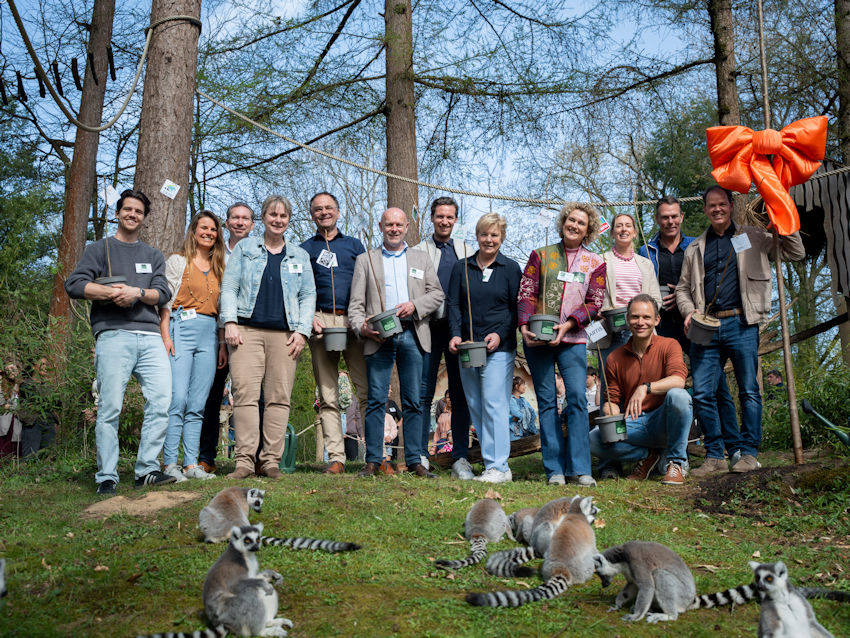
With their joint nature restoration project in Madagascar, the thirteen affiliated members of the Dutch Zoo Association (NVD) are communicating more than just a new nature conservation initiative. The project, aimed at protecting 250 hectares of rainforest and planting 1 million trees, is also a visible moment in which the sector demonstrates how it views its own role.
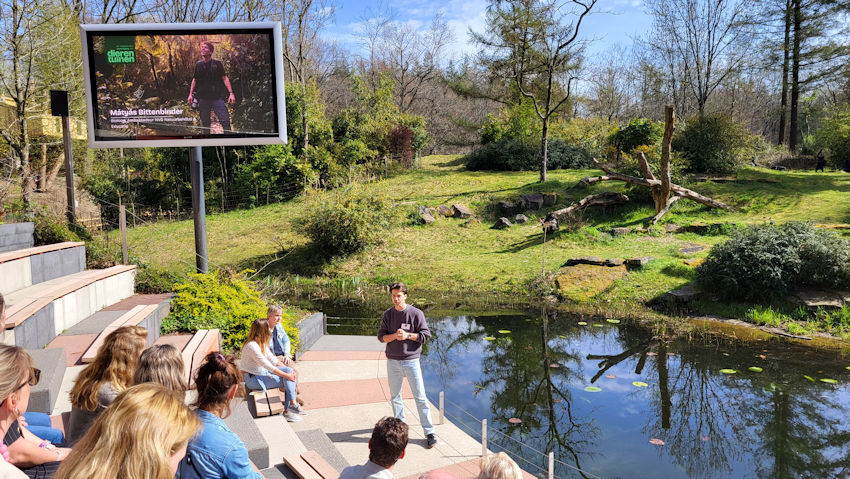
The zoos make it clear that they are more than just a day out. This message was reinforced with the introduction of Mátyás Bittenbinder as ambassador for nature conservation and education. In doing so, the sector demonstrates that it intends to tell this story in a more collective and recognizable way from now on.
Four pillars of the modern zoo
The NVD has long positioned its members on four pillars: recreation, education, research, and nature conservation. As such, they are places where nature is protected, people are inspired, and knowledge takes center stage. This broader positioning was also reflected in the explanation by Wineke Schoo, Director of the NVD. At the same time, she emphasized that recreation remains of undiminished importance: “People must, above all, continue to visit the zoos. That is a basic prerequisite for guaranteeing the quality of the other pillars.”
That is precisely an important distinction. The movement now becoming visible is not that zoos are shifting from recreation to nature conservation. Rather, it is about nature conservation being integrated more visibly into the recreational and educational offerings. According to Schoo, the change therefore lies not so much in the content, but in the way that content is now being communicated. “The difference compared to now is that this is, for the first time, truly a joint project. That is a clear break with the past.”
Why together right now?
This joint step is therefore almost more newsworthy than the Madagascar project itself. Schoo says about this: “We believe the time is ripe to do this together, simply because you can achieve more when you join forces.” That is also where the strategic importance of this step lies. Whereas nature conservation was previously mainly visible through individual initiatives by parks and their foundations or funds, it now carries more weight by being brought under the banner of the NVD.
Roel Welsing, director of Apenheul, confirms this. Apenheul is one of the thirteen affiliated zoos and has itself been contributing knowledge, money, and manpower to nature conservation projects outside the park for years through the Apenheul Nature Conservation Fund. He is pleased with the collaboration: “I think that as zoos, we are sometimes a bit more modest than necessary. This project is a great opportunity to show what we are capable of together.” According to him, zoos worldwide collectively constitute one of the largest financiers of nature conservation, something that is often more aware of within the sector itself than outside of it.
Madagascar is a logical choice for now.
There are several reasons why the project is landing in Madagascar. The ecological urgency is great: approximately 80 percent of the original rainforest has disappeared. In addition, a reliable partner has been found in the Malagasy research center Centre ValBio. At the same time, many unique animal species live on the island, including various species of lemurs that can also be seen in Dutch zoos. Many of these species are severely threatened with extinction. This creates a direct connection between nature restoration at a distance and the story that visitors in the Netherlands receive.
The project's setup also shows that the NVD wants to achieve more than a one-off action; they are committing themselves for at least five years. Moreover, it is not just about financial support; the role of local communities is an explicit part of the approach. Research shows that many children in Madagascar see very little of their own nature. That is precisely why involving those children is important, says Welsing: “We cannot expect the love for nature to grow on its own; we want to help with that as well. That is, of course, also our objective here in the Netherlands with our visitors: to convey that love for nature.”
Mátyás Bittenbinder added extra color to that layer during the meeting. He spoke of a journey that was both confronting and inspiring: confronting due to the speed at which nature in Madagascar has been lost, but also inspiring because nature restoration is becoming visible in practice. On location, he created a YouTube series to show a broad audience that good and modern zoos not only care for animals but are also committed to nature and species conservation worldwide. Moreover, with this video series, the project gains a public format that aligns with the way zoos are increasingly telling their story: not only through information panels, but also through images, experience, and storytelling.
From nature restoration to park experience
Another factor playing a role in the background is that zoos are increasingly becoming part of a broader societal discussion about their role and right to exist. Bittenbinder indicated that this was why he initially had doubts about the ambassadorship. Nevertheless, he made a conscious choice, precisely because of the education and conservation pillar of the NVD, which he says he supports '100%'. In that role, he also emphasizes the power of zoos to interest and inspire people about animals and nature in an accessible way.
The next question, therefore, is how this story is translated into the parks themselves. The shared message gains strength when visitors also recognize it in the park experience. The first outlines of this are now becoming visible. Artis links the project to a specific location in the park and to the 'Artis tells' moments with the lemurs. DierenPark Amersfoort is planting the project's symbolic tree near the lemur enclosure and providing context there. In Apenheul, the project connects to the existing Madagascar habitat.
This translation to the physical environment of the park is relevant because it is there that the link is made for visitors between the animal they see and the habitat from which that animal originates. Nature conservation then does not remain something abstract or something that only takes place far away, but is given a visible place within the park boundaries as well.
More than a day out
In doing so, the project in Madagascar primarily demonstrates a broader development. Zoos are not shying away from their recreational function, but are integrating nature conservation more visibly into their offerings. In a market where visitors seek not only relaxation but also value context and meaning, zoos show how they provide this in their own way.
As Schoo summarized it: “With this project, the NVD zoos demonstrate that nature conservation is not a separate ambition, but something to which we contribute concretely together.” The joint step taken by the NVD thus marks not so much a new direction, but rather a new way of telling the story. Zoos are making their existing societal role more emphatically and collectively visible.
More information: www.nvddierentuinen.nl
With thanks to (author of this article): Timo van Boekel, leisure consultant at Ginder and specialist in business operations for day attractions.