Playing is above all fun—and it should stay that way. During the Speelplan play congress, the focus was on the added value that 'outdoor play' has for people and society. When you look at aspects such as health benefits, skill development, or forming friendships, that lighthearted 'play' is actually quite a valuable activity.
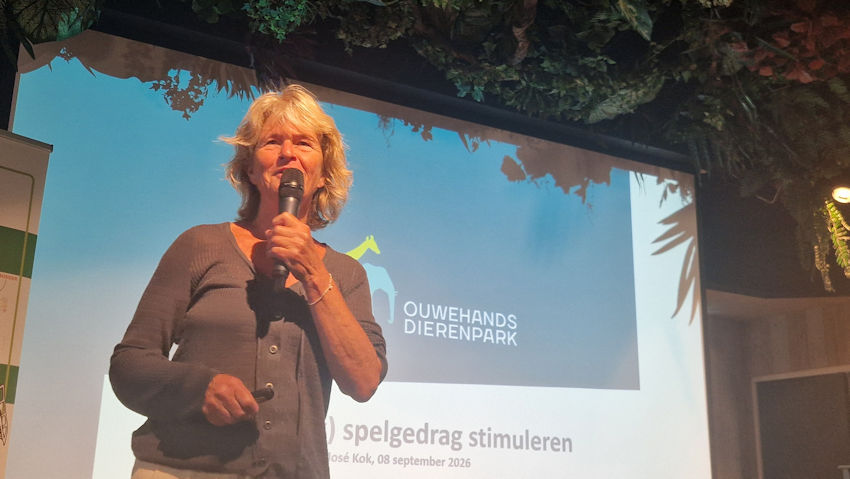
The congress took place at Ouwehand Zoo. Biologist José Kok, Chair of the Ouwehand Zoo Foundation, was the first speaker to take the stage. She demonstrated that 'play' is also important for the development of animals. Through play, they learn all kinds of skills they need later in life; for finding food, avoiding dangerous situations, or interacting with their peers. For animals in the wild, these are skills necessary for survival. Through play, animals (and humans too) develop their motor skills, social skills, and the recognition of objects (playground equipment, or the climbing tree).
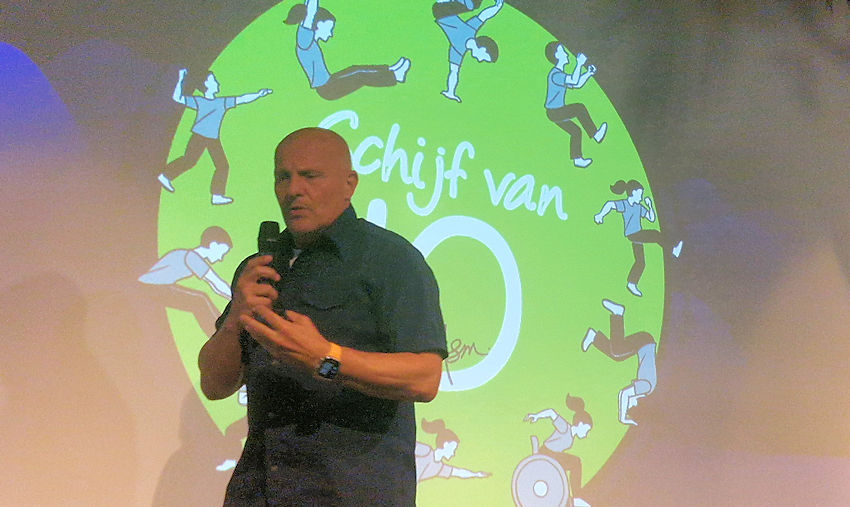
Movement is a very important part of play. A guide to the practical implementation of 'better movement' was provided by Rene Wormhoudt, who has trained top athletes, among others, based on the philosophy of the Athletic Skills Model (ASM). This is a tool in the fight against physical inactivity and the increasingly poor motor skills of children. Based on ASM, outdoor spaces are designed where hundreds of different forms of play are possible. This encourages diverse target groups to use the ten fundamental forms of movement. It provides children (but also the elderly) with multiple developmental skills such as
- better movement and thereby fewer injuries and better health;
- better cognitive development, because movement and learning are correlated.
More information: www.athleticskillsmodel.nl
Within the recreation sector, the focus is primarily on the commercial added value of a playground. For example, in stimulating ticket sales, providing a boost to the hospitality industry, or serving as an argument for choosing a specific park. However, consider the other added values that 'play' offers children. In this way, you not only offer your guests a 'fun' time, but also genuinely support children in their development. With this societal added value, we create greater support for the sector among government bodies and within the wider public sphere.
explanation Pretwerk.nl
Playgrounds with even more added value
If you want to achieve multiple objectives with a playground, the landscaping and selection of play equipment naturally become much more complex. And, of course, the safety requirements must also be incorporated into this.
The Play Plan theory of a 'play neighborhood' can also be applied to the play-friendly design of a holiday park or campsite. Within play neighborhoods, the following elements come together in the Five-Factor Model :
- Traditional playground: challenging playground equipment and meeting place.
- Dirty knees: Playable greenery to get nice and dirty.
- The Little Square: Paved area for free play, cycling, scooting, or playing marbles.
- Football pitch: space for sports, physical challenge and meeting.
- Play route: Connecting and safe child-friendly route through the neighborhood.
.
Campsites also have smaller play areas near the accommodation and a larger location for socializing and extended playtime (often including catering facilities). These small play areas clearly play a role as well. If you remove them, children (in residential areas) play outside much less often. It often involves many short moments that, when combined, still account for a significant amount of playtime.
explanation Pretwerk.nl
Playgrounds are more than just a collection of play equipment. The surface and landscaping are also part of the play experience and make a playground more adventurous and challenging. These are precisely the elements that help children develop through play. Examples of these two undervalued play components:
Building block: Paving
- Paths around and through the site for learning to ride a bike and move; small squares that invite play (e.g., ASM square surfaces for various forms of movement).
- Traffic squares for go-karting; paving elements that support play initiation and lay out routes through the site.
Building block: Green
- Trees with a play function; bushes in clusters for hiding, exploring, and forming play routes.
- Grass fields for cartwheels and free play; hills to roll down or sit on; raised planters for balancing/sitting.
- Loose materials (branches, stones) stimulate building and creative play.
Inclusive play areas
The congress also provided significant attention and insight into inclusive playgrounds. It is a societal problem that children with disabilities are still too often excluded because they are physically unable to connect with the playground. This therefore begins with the design of these playgrounds, and the designers have a responsibility in this regard.
There are now various guidelines that can help you design an inclusive playground. An organization like Jantje Beton (also one of the speakers) actively supports this by backing ' Together Playgrounds '. After all, one of the objectives is to let children with and without disabilities play together.
With thanks to (organizers of the play congress): Speelplan