Pleisureworld and HISWA Recron organized a study trip from October 6 to 10 to visit several exceptional French leisure companies and the Salon Atlantica trade fair. Organizer Richard Otten (Pleisureworld) and participant Sjoerd van Aalst (CampPlus) returned full of new inspiration. In this article, they share the lessons they learned.
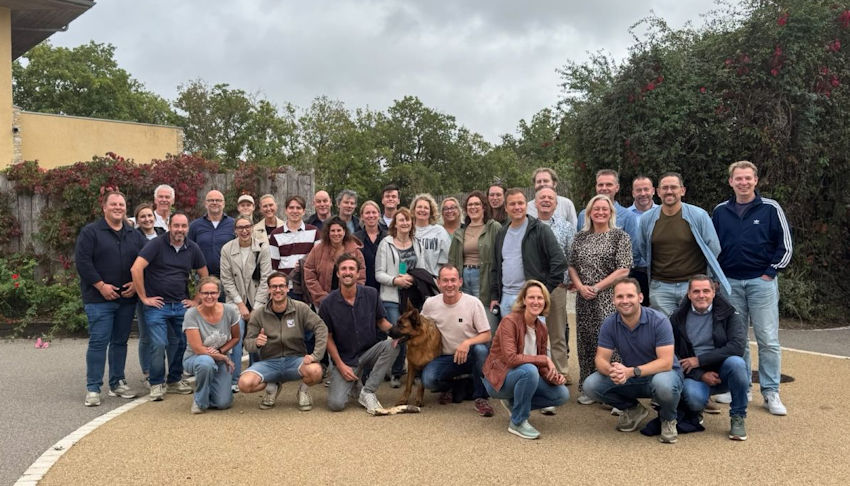
In this article, Sjoerd provides a description of the journey, and Richard Otten adds context.
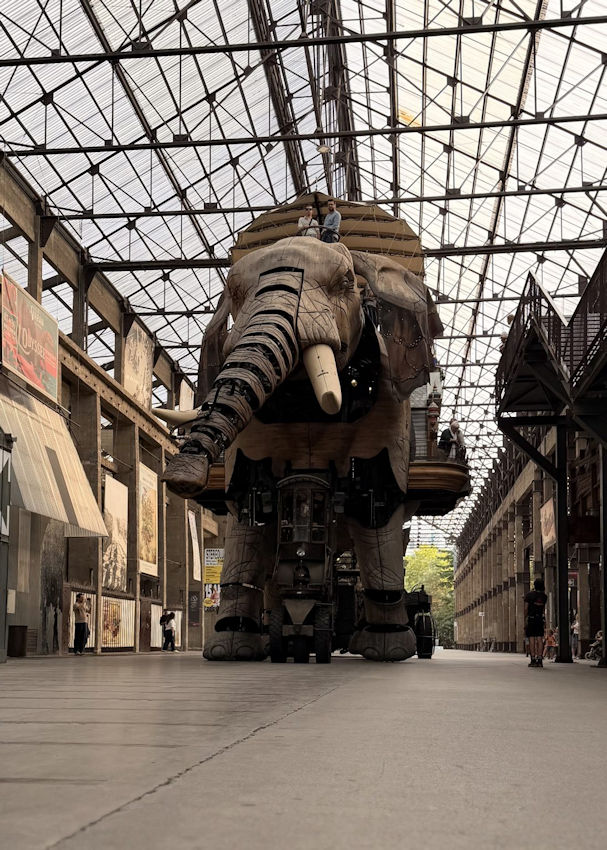
Van Aalst describes the first stop on the program: Les Machines de l'île ; “A creative world where art, technology, and fantasy come together. With the absolute eye-catcher being the enormous mechanical elephant moving across the grounds. A remarkable display of technology and entertainment, right in the heart of Nantes.”
Machines de l'Île in Nantes is yet another interesting example of area development. While parts of the area across the river had previously fallen into disrepair, the city opted for redevelopment, with this unique concept among others serving as a focal point. The combination of art, technology, industrial heritage, and imagination gives Nantes a story that sparks visitors' curiosity.
The development shows how a distinctive attraction can contribute to the appeal of an entire city. The value lies not only in the visitors to the attraction itself, but also in the image projected to hotels, the hospitality industry, and other businesses.
I find this particularly interesting for Dutch regions that are not automatically situated in prime tourist locations. Think of East Drenthe or West Brabant. Even there, there are plenty of stories, landscapes, and historical connections. The question is how to bring these together into a distinctive concept that gives people a concrete reason to visit that specific destination. In this regard, a good attraction can be much more than a standalone business: it can become a PR machine for the entire region. However, a collaboration between entrepreneurs, the municipality, and the right concepts is crucial here!
Tour guide Richard Otten
The first day concluded with a joint dinner at La Cigale , a beautiful historic brasserie. A great opportunity to get to know the other participants better after the sprint on the Paris metro.
Three campsites, three different visions
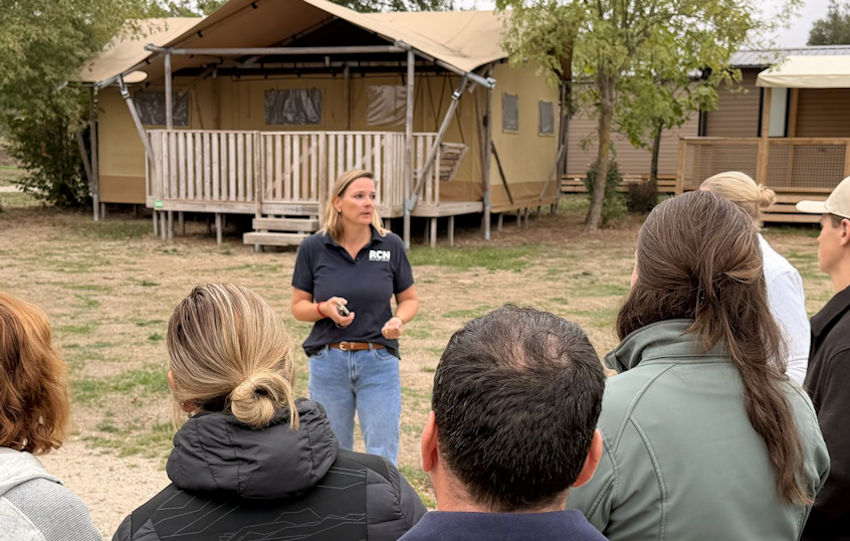
Wednesday was entirely dedicated to leisure accommodation. We visited three campsites in the Vendée: RCN La Ferme du Latois, Castel Camping La Garangeoire, and Camping Village de la Guyonnière. Three very different businesses, each with its own approach.
RCN La Ferme du Latois is a former farm that has grown into a versatile RCN holiday park. A professionally organized company with a complete range of accommodations and facilities, where the rural character has been preserved. Park manager Meike van de Uitvlugt gave us a detailed explanation and then showed us around the park.
At Castel Camping La Garangeoire, we entered a completely different world. A beautiful estate with a characteristic French manor house, lush greenery, and an enormous amount of space. Here, it is all about peace, nature, and quality. There is no abundance of amenities, but owner Anne de Kerautem makes clear choices regarding a specific atmosphere and target audience. A particularly fine example of how a campsite can distinguish itself by precisely not trying to offer everything.
Camping Village de la Guyonnière also made an impression. This family business with Dutch roots is the life's work of Pierre Jaspers, who started in 1991 with just six pitches and has since grown into a five-star campsite. With an average of around 225 m² per pitch, guests are offered a remarkable amount of space here. The entrepreneurial philosophy was also appealing: great trust in employees, a strong focus on guest satisfaction, and a clear identity of its own. Despite its Dutch background, the business feels like a true French campsite. Pierre's sons, Thys and Piet, are now in charge.
Fortunately, there are still many family campsites in France where the next generation continues and further develops the business. We see this in the Netherlands as well, but it remains remarkable to discover how strongly family history is sometimes intertwined with the business.
At Castel camping La Garangeoire, we saw the family tree of the current generation's ancestors in the manor house. Anne spoke about the history and development of the business. You realize then that you are not just looking at a campsite, but at generations of entrepreneurship that have built something together. Anne put it aptly: “We are keepers, not builders.”
That thought appeals to me. You don't always have to start over or do everything differently. Sometimes the most important task is to treat what previous generations have built with care and to build upon it in your own way. Anne, for example, also said: “I think my grandfather would still feel at home here, at the campsite as we have built it now.”
Tour guide Richard Otten
Bio Habitat: efficiency in chalet production
On Thursday, we started with a visit to Bio Habitat , a producer of recreational accommodations under brands including IRM and O'Hara.
The factory tour was impressive. The chalets move on wheels through the production hall, with the next production step being carried out at each workstation. In this way, a complete chalet is produced with approximately 24 hours of work. It is a particularly efficient and well-organized process; it remains fascinating to see how standardization, logistics, and a smart production setup come together.
Salon Atlantica: private bathrooms French style
After the factory visit, Salon Atlantica in Niort was on the program, an important French trade fair for the leisure sector. Last year, we visited Salon SETT in Montpellier, among others; these types of fairs are naturally an interesting place for CampPlus to look around. And the enormous range of private sanitary facilities, in particular, was a surprise.
It seemed as if every chalet builder and carpenter had their own unit on display at the fair. From simple wooden houses to somewhat more elaborate versions. The finish was often a bit French. With a typical French touch, in other words! Sometimes quite simple and not always very refined, certainly compared to what we are used to in the Netherlands.
But at the same time, the enormous range shows how popular private sanitary facilities are in the French camping market. It is interesting to see how differently the same product is viewed and how many possibilities there are. For CampPlus, it was a valuable trade fair visit, with new ideas and plenty of food for thought.
In terms of market size, France is simply a size larger than the Netherlands. This makes it interesting to examine the advantages economies of scale offer, for example in purchasing, production, technology, and knowledge development. At the same time, the question remains how to combine efficiency with entrepreneurship, individuality, and personal hospitality. After all, growing larger is not an end in itself; it must ultimately lead to a stronger company. Nevertheless, private equity is clearly present in every aspect of this sector by now.
Tour guide Richard Otten
Highlight: Puy du Fou
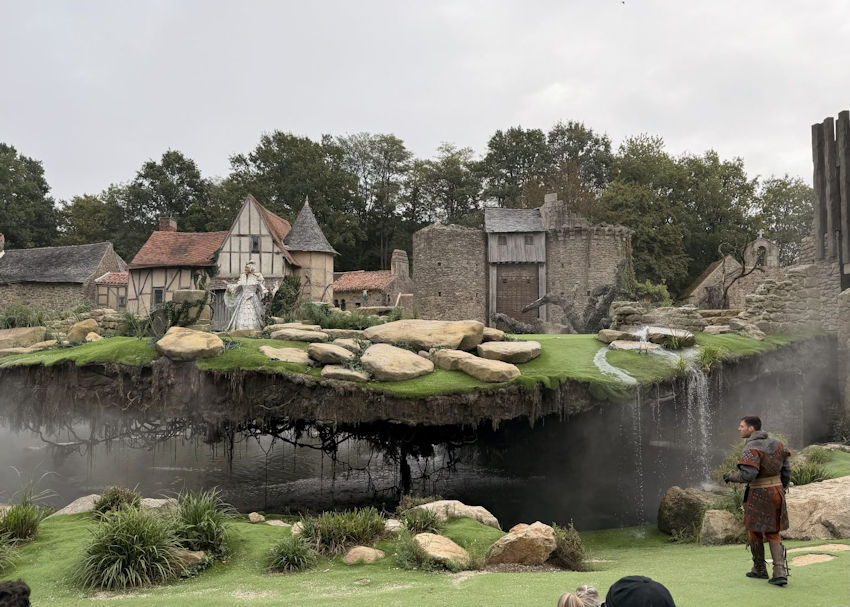
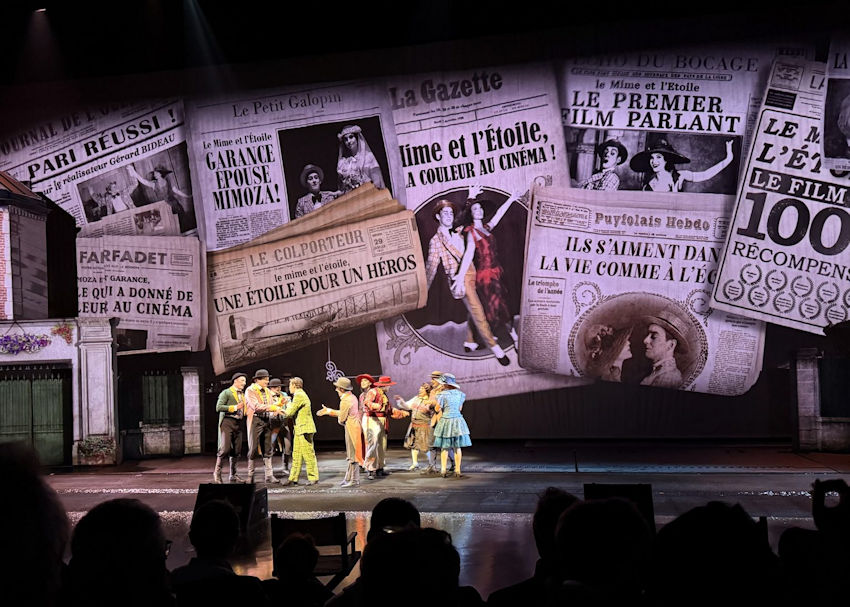
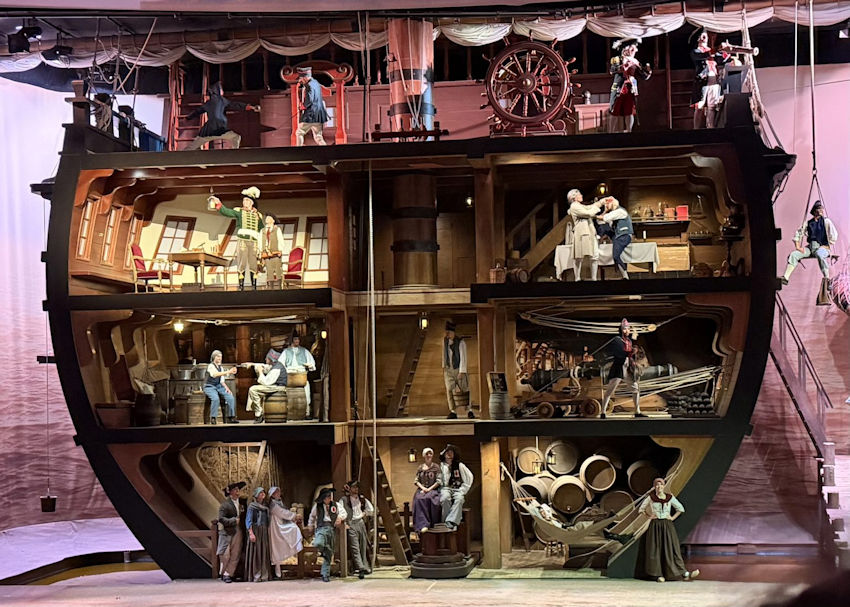
Friday brought perhaps the biggest surprise of the trip: Puy du Fou . What a fantastic experience!
This French theme park doesn't revolve around roller coasters and traditional attractions, but around historical stories that come to life in spectacular shows. From gladiators and Vikings to impressive performances featuring horses, birds, music, and special effects. The scale on which this happens is almost unimaginable. And everything is perfect: the sets, the music, the actors, the technology, and the entire environment. And conveniently for me, you hardly need to understand French to be completely drawn into the story.
Other participants were also deeply impressed, and some in our group were emotionally moved. Some rightly called it the icing on the cake of the trip. For me too, Puy du Fou was truly an unexpected gem. It was hard work, but I managed to see all the shows in one day. A fast-track pass, or as they call it there a Pass Émotion, is highly recommended. You can enter up to 10 minutes before the start of the shows, and the best seats are reserved.
Of course, a campsite is not a theme park. But Puy du Fou does demonstrate just how powerful a well-thought-out concept can be. Not only through major investments, but above all through the enormous attention to detail and the way everything comes together to form a single experience. We in the leisure and tourism industry can certainly learn something from that.
It was difficult to explain to the Dutch leisure professional beforehand exactly what Puy du Fou is. A theme park? A show park? A historical experience? Actually, it is all of those things, but none of those descriptions do justice to the experience. The technology, sets, actors, and shows are impressive, but above all, it is the emotion the park manages to evoke that makes it special. Everyone in our group was ecstatic afterwards and often simply speechless for a moment.
That got me thinking again about the question of how much attention leisure companies pay to the emotion they want to leave with their guests. We often talk about accommodations, facilities, and investments, but ultimately, it is about what people experience together and remember later. Some concepts are simply difficult to explain. You have to experience them! Something we also saw recently during the FEC trip, for example, with a destination like the Chocolate Factory in Veghel.
Tour guide Richard Otten
Conclusions at the end of the journey
Looking back, it was five particularly successful days. The three campsites demonstrated the different ways in which a successful leisure business can be established. Bio Habitat provided an impressive insight into efficient chalet production. Salon Atlantica showed the extensive development and experimentation taking place with, among other things, private sanitary facilities. And Puy du Fou proved that a strong experience goes far beyond just good facilities. For CampPlus, it is important to regularly look beyond the Dutch market. Discovering new products, observing different working methods, making contacts, and gathering ideas that we can incorporate into our own activities.
A big compliment to HISWA-RECRON and Pleisureworld for organizing this inspirational trip. And special thanks to Marike Rosier , Arthur van Disseldorp (of course also for the lift), Remko Dolhain , and Richard Otten for the guidance and the wonderful program. And naturally, thanks also to all fellow travelers for the enjoyable days and interesting conversations.
Five days full of inspiration, new insights, and wonderful encounters. And a fond reminder that there is still so much to discover beyond our own borders.
Sjoerd van Aalst from CampPlus
What I mainly take away from this trip is that looking across the border changes the way you view your own business. The French market has different traditions, opportunities, and challenges, but the value of knowledge exchange lies precisely in those differences. Not everything can be copied immediately, and it shouldn't be. However, France is undoubtedly the largest country in this area when it comes to campsites and holiday parks, and there is always so much to learn! Another trip will certainly follow next year!
Tour guide Richard Otten
Thanks to:
- Thank you to Sjoerd van Aalst for his enthusiastic report. See his complete story at: www.CampPlus.nl
- Richard Otten van Pleisureworld for organizing this inspiring trip and interpreting the developments.