Dutch recreation companies do not need to build a complete wellness resort to benefit from the growing interest in wellness holidays. The largest market actually consists of guests who want to add relaxation, exercise, healthy food, and nature to a regular holiday. Opportunities lie here, especially for holiday parks, campsites, hotels, and providers of outdoor activities.
According to the Global Wellness Institute , the global market for wellness tourism had a size of nearly 894 billion dollars in 2024. This market is expected to grow to 1,4 trillion dollars in 2029. With 348,4 million trips and 258,2 billion dollars in spending, Europe is the second-largest wellness region in the world. Wellness expert Marlies Sobczak observes that there is still a world to be won in the field of wellness in the Netherlands. This sector is still fully developing here.
'Wellness'; sounds like a market for luxury spas, medical programs, and exclusive retreats. The reality is much broader. In nearly 85 percent of wellness trips, well-being is not the main goal, but rather part of a regular vacation. For example, a guest books a weekend at a holiday park and combines it with a yoga class, bike ride, sauna visit, healthy meal, or guided nature walk.
It is precisely this so-called secondary wellness market that offers prospects for Dutch recreation companies.
Dutch holidaymaker seeks peace
A new market study by Acorn Tourism Consulting , conducted for the CBI, shows that the Dutch are particularly sensitive to the well-being aspect of holidays. Of the Dutch travelers, 69 percent cite relaxation and escaping the daily routine as an important travel motivation. In this respect, the Dutch score significantly higher than Germans and Britons. Additionally, 52 percent consider sufficient time to relax an important factor when choosing a destination.
The Netherlands may not possess the spa tradition of Germany or the thermal baths of Austria, but it has other strong assets. The coast, dunes, Wadden Islands, forests, water-rich areas, and extensive cycling and walking networks align well with the growing demand for nature-based wellness.
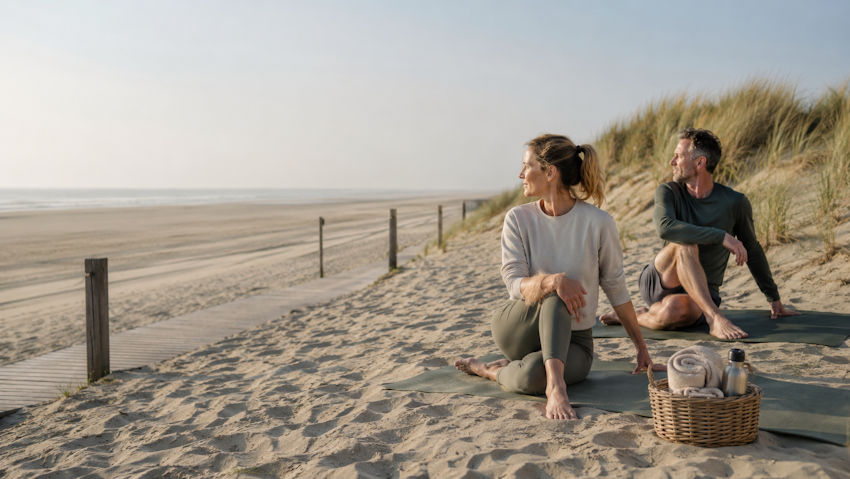
Substantial investments are not always required for this. Silent walks, outdoor yoga, wild swimming, canoeing, breathing exercises, healthy regional dishes, and digital detox packages can be added to an existing stay. The surroundings thereby become part of the wellness product.
Opportunities for the low season
Relaxation, better sleep, and stress reduction are not tied to a summer vacation. A two-day package in November or a midweek stay in March can be just as attractive to this target group as a stay during the high season. In this way, wellness can contribute to a better distribution of occupancy.
Business tourism also offers opportunities. Companies are paying more attention to vitality, mental health, and team building. A meeting package can be expanded with a walk, a healthy lunch, a yoga session, or a program focused on sleep and recovery. Holiday parks and hotels with meeting facilities can thus give new meaning to quiet midweeks.
From provision to result
The market study also shows that communication surrounding wellness is changing. Simply stating that an accommodation has a sauna, swimming pool, or fitness room is not always sufficient. Guests want to know what an experience offers them.
This can be translated into very practical terms. A package helps the guest, for example, to sleep better, unwind, exercise more, or reconnect with nature. For recreation businesses, this means that not only the facility, but above all the intended result, must take center stage.
Personalization is becoming increasingly important in this regard. A short questionnaire prior to the stay can provide insight into the guest's wishes. One visitor primarily seeks rest, while another guest prefers to be more active. Based on this, activities, meals, and treatments can be tailored.
This doesn't necessarily require expensive technology. A choice of activities, a personalized itinerary, a tailored food selection, or collaboration with a local instructor can be sufficient to give the stay a personal touch.
Wellness expert Marlies Sobczak advises entrepreneurs to thoroughly inform themselves (or have themselves informed) about the characteristics of the complex and very broad wellness field when developing a wellness offering. This can help in understanding this market segment and embedding the services within a comprehensive tourism and recreation concept.
Interpretation by Marlies Sobczak , Vitacon
Healthy food and local cooperation
Hospitality can also become a more important part of the wellness offering. Healthy food, local products, and attention to origin align well with the need for a holiday that benefits both physically and mentally.
Opportunities lie here for collaboration with farmers, regional producers, coaches, yoga teachers, nature guides, and other local entrepreneurs. A recreation business does not need to acquire all knowledge and activities in-house. By building a network around the location, a broader range of offerings can be developed relatively quickly.
At the same time, this collaboration ensures that a larger share of spending ends up in the region. This aligns with another development within the wellness market: guests are looking not only at their own well-being, but also at the impact of their trip on nature and local communities.
The Netherlands as a short wellness destination
In addition to the domestic market, the Netherlands can focus more strongly on visitors from neighboring countries. Germany is the largest wellness market in Europe, with 77,2 million wellness trips in 2024. German and Austrian guests have a relatively high interest in nature, exercise, quality, and preventive health. British travelers primarily seek relaxation, stress reduction, and mental peace. French guests place more value on comfort, gastronomy, spas, and treatments.
The Netherlands can serve these markets with short, easily accessible stays that combine nature, cycling, walking, water, healthy food, and relaxation. Quiet coastal areas, the Wadden Islands, wooded regions, and rural destinations, in particular, can distinguish themselves more clearly in this way.
Opportunities exist elsewhere in Europe as well. Not every region needs to develop a new wellness resort. Many destinations already possess the key ingredients: scenery, outdoor activities, local cuisine, hospitality, and a unique story. The main challenge is to organize and market these elements as one cohesive experience.
No medical promises
Some caution is required when developing wellness products. Entrepreneurs should not promise medical or therapeutic results that cannot be substantiated. Concepts such as relaxing, recharging, exercising, eating healthy, and spending time in nature are generally safer than claims regarding cure or treatment.
The most important opportunity, therefore, does not lie in copying medical wellness concepts. For a large part of the leisure sector, a more accessible model is more interesting: enriching existing holidays with activities and facilities that demonstrably contribute to rest, exercise, and a healthy lifestyle. But supported by expert advice!
Practical opportunities for recreation businesses
- Inventory which existing components already contribute to relaxation, exercise, sleep, healthy nutrition, or experiencing nature.
- Develop short packages for weekends and quiet midweeks outside the high season.
- Combine your stay with hiking, cycling, yoga, swimming, canoeing, or guided nature activities.
- Collaborate with local instructors, guides, coaches, and food producers.
- Ask guests about their personal goals in advance and offer choices.
- Communicate the benefit for the guest, and not solely the available facilities.
- Substantiate sustainability claims and be cautious with medical promises.
Wellness is therefore not merely a separate tourism segment. It is increasingly becoming a quality layer within the total recreational product. For Dutch entrepreneurs, the greatest opportunity probably lies not in more luxury, but in smarter combination and presentation of what they often already offer.
More information:
- Marlies Sobczak-Boumans, Wellness Consultant, Vita-Con Consultancy
- https://www.acorntourism.co.uk/