Many outdated (and also cheap) holiday parks and campsites have disappeared from the market in recent years. Consequently, the supply in the budget segment has also decreased significantly. Are there now opportunities to capitalize on this? In the retail sector, budget concepts (e.g., Lidl, Aldi, Dirk, and Action) are particularly successful. Which budget concept works for overnight leisure?
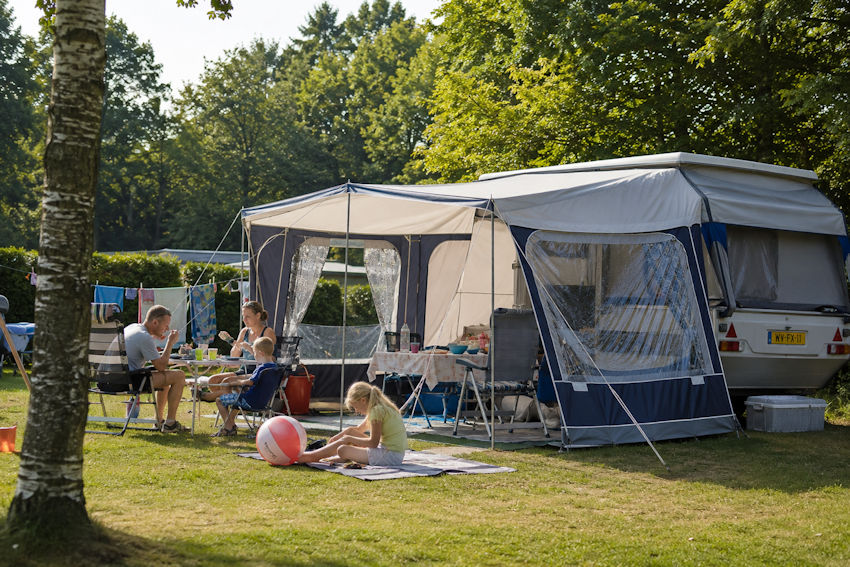
Consumers currently looking for a cheap holiday need to be creative, especially during the high season. In this article, we look at various options – and the business model behind them.
See also:
- The rediscovery of 'simplicity' on vacation
- Nibud figures show that the affordability of recreation is under pressure.
Price-driving effect – mainly due to taxes
It is not easy in the Netherlands to offer holidays at a very low budget rate. Additional factors that drive up prices include:
- VAT (for accommodations recently increased from 9% to 21%. Camping: 9%)
- Tourist tax. (Average € 2,79 pppn in 2026)
- Participation in a marketing platform (commission) such as booking.com or airbnb (around 15%)
- Reservation software (1 – 3%)
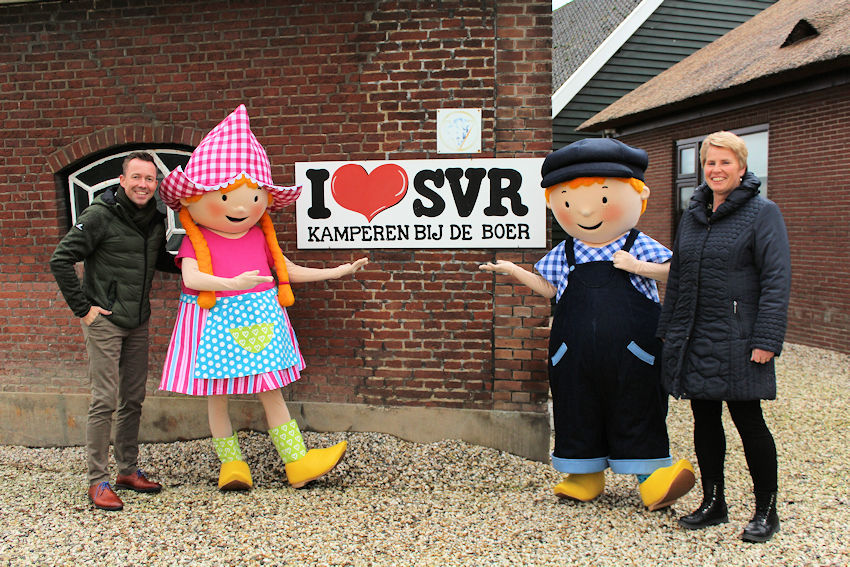
Camping at the farm
The Stichting Vrije Recreatie (SVR) has been known for years as an excellent alternative for a cheap holiday on the premises of a (former) farm. For the past year, the SVR has no longer applied maximum prices to its affiliated campsites. SVR spokesperson Bas van Mill: “The variation in offerings, service, and location is so great that a fixed maximum price no longer worked well. We now work with a 'recommended price'. Campsites priced below that range are shown with a single € symbol, while the somewhat more expensive alternatives are displayed in €€€. Campers can select based on this themselves. Nevertheless, camping on a farm remains one of the cheapest options for a holiday. If you bring your own camping equipment, you also qualify for the low VAT rate. However, tourist tax, especially if it is a fixed amount, is a relatively substantial part of the price for many of our businesses. Recently, the SVR also launched the platform hurenbijdeboer.nl . Many cheap alternatives can be found there as well.”
How can a farm campsite serve the budget segment?
- The investments for camping facilities are relatively low. Often, this primarily concerns the water and electricity connection and/or a sanitary building.
- The majority of camping businesses have a second source of income alongside their main business. To a large extent, this is 'the farm', but there are also people who work elsewhere as employees. The guests do not need the owners continuously.
- The SVR farm campsites experience a relatively high occupancy rate during the camping season from March 15 to October 31. Van Mil estimates this at 70 to 80%.
Van Mil: “Most campsites work with a standard rate for the entire year. After all, land doesn't get more expensive during the summer holidays either. The cheapest options come in at around €18 per night for a small 2-person tent. Our prices are mainly under pressure due to various taxes. Motorhome owners also recently faced an increase in vehicle tax.”
Holiday parks with economies of scale and low costs
In the Netherlands, there are several holiday park chains that focus on holidays at attractively priced rates. Laurens Taekema of Parkvakanties.nl can clearly see the prices being charged on his platform: “In the cheapest segment, we see the Oostappen Group and Succes Parken, among others. We also regularly see attractive offers at Molecaten and TopParken. For a weekend for a family of 4 during the summer holidays, for example, you pay around 300 to 350 euros at Oostappen, and starting from 450 euros at Molecaten or TopParken.”
How do chains achieve their low prices?
- Who isn't familiar with the term 'Mass is money'? (Peter Gillis – Oostappen Holiday Parks) From an entrepreneurial perspective, this primarily means lower costs due to sharp, large-scale purchasing.
- Simplification of the offering and standardization. Many central facilities are offered free of charge, meaning you do not need extra staff for ticketing and control.
- Simple accommodations. Chalets, mobile homes, and rental tents, in particular, are options with a low purchase price, and therefore a somewhat faster return on investment. However, this often comes at the cost of slightly lower comfort and appearance.
Holiday park chains use smart marketing software with dynamic pricing. However, these parks are significantly more expensive during school holidays. This is also part of the company's revenue model. Outside the season, locations are often offered at extremely low prices.
Social entrepreneurship
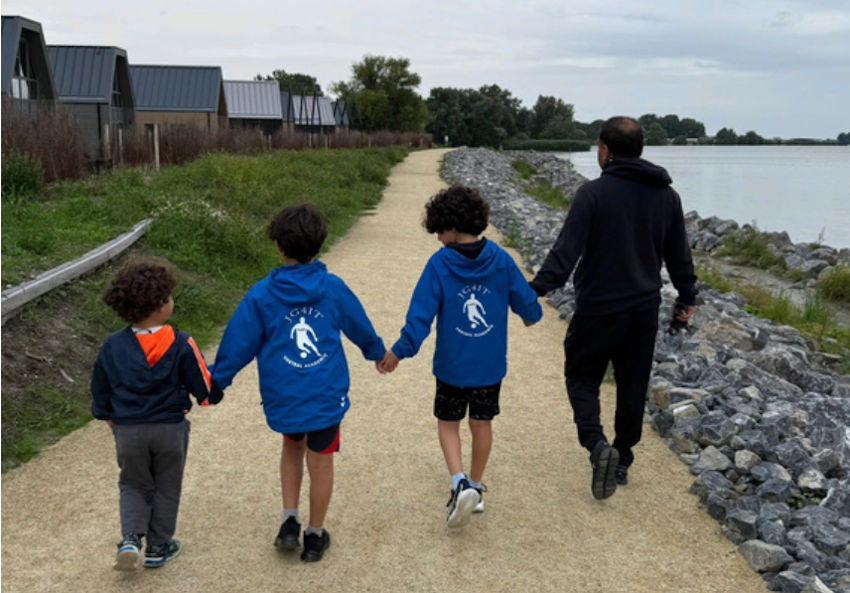
A form of low-priced and sometimes even free holidays is realized by entrepreneurs who follow their hearts. They offer holiday destinations for people with a limited budget or other disabilities. Some parks or chains have their own program for this (for example, RCN). In Flanders, there is a government program called 'Iedereenverdient Vakantie' (Everyone Deserves a Holiday) that partially 'sponsors' holidays.
The De Vakantiebank foundation is active in the Netherlands. It effectively bundles supply and demand. With a group of approximately 70 partners, holidays are offered at EuroParcs, Topparken, and the Oostappen Group, among others. De Vakantiebank ensures the fair distribution of the holidays to people who need them. In this way, nearly 1000 families are helped annually. Finding additional funding (budget amounts to €600.000) is also part of the activities. When more than 40 weeks of holiday spots are offered, a fee of €400 per week is paid to the park.
What are the challenges with this type of holiday offering?
Pim Loeff, project leader at the Vakantiebank, explains that bringing supply and demand together does not happen automatically.
- The waiting list of people / families who want to go on vacation but cannot afford it is much longer than the supply.
- Many available holiday weeks fall in the low season, while 90% of the holidays go to families with school-aged children.
- Families who haven't been on vacation for years experience a barrier when it comes to camping. They prefer accommodations where they can settle in immediately.
- The Holiday Bank is heavily dependent on donations to cover accommodation costs and reimburse families for travel and lodging expenses.
- Families just want to participate. It is therefore kept quiet that guests are coming via the Vakantiebank. The organization does, however, act as the contact person for the bookings.
- It is sometimes striking that a very large part of the fee paid to a park goes towards tourist tax.
More information (and registration): www.vakantiebank.nl
A form of social entrepreneurship on the rise is cooperative campsites and holiday parks. These recreational businesses are owned by the plot owners. They can keep costs partially down through volunteer work by the cooperative's participants. However, there are also risks: operations rely heavily on constructive cooperation among the participants, and expertise in efficient business management is not always sufficiently available.
Even more initiatives
This article is certainly not exhaustive regarding the options currently on offer. Some inspiring parties that are also active in the budget segment:
- Stayokay (youth hostels)
- In het Groen (formerly VeKaBo)
- Trekking cabins (part of De Groene Koepel)
- Corendon (and other cheap all-inclusive flight holidays abroad)
- Various simple campsites (that still fall under the low VAT rate)
- Group accommodations for school camps (are increasingly facing financial difficulties.)
Advice for entrepreneurs
Willem Kraanen, who is involved in various Vitale Vakantieparken projects on behalf of Ginder, offers a few more recommendations regarding the feasibility of holiday parks in the low-price segment:
- Older parks can also be made profitable in the lower price segment. It is important to strike a balance between cost control and investing in reasonable basic quality.
- Parks in the lower price segment are not only visited by people with low incomes. Sometimes people simply choose to book a cheaper holiday.
- Eliminating expensive facilities and saving on operations (automating) are useful tools to reduce costs.
- With all-in concepts, the holidaymaker can save on the total price. In that case, the entrepreneur saves on transaction costs and activities.