The hospitality sector continues to grow in the second quarter of 2025. Turnover is rising, volumes are increasing, and tourist spending has never been higher. Nevertheless, there are concerns. Personnel costs are rising sharply and are putting increasingly heavy pressure on entrepreneurs' profit margins. The proposed VAT increase is also causing unrest, and studies point to a clear negative impact on the sector; domestic holidays are becoming more expensive, and guests will look for alternatives. This is evident from a sector analysis by Rabobank.

Growth in the hospitality sector, including holiday parks and campsites
The hospitality sector's turnover grew by 5,5% in the second quarter. While the first few months of 2025 also showed positive figures, this growth must be put into perspective. Looking at the same period in 2024, the poor spring weather led to disappointing volumes. Therefore, it was expected that production in the sector would increase in the second quarter (see Figure 1). We expect this growth to continue for the rest of the year, but the situation remains fragile.
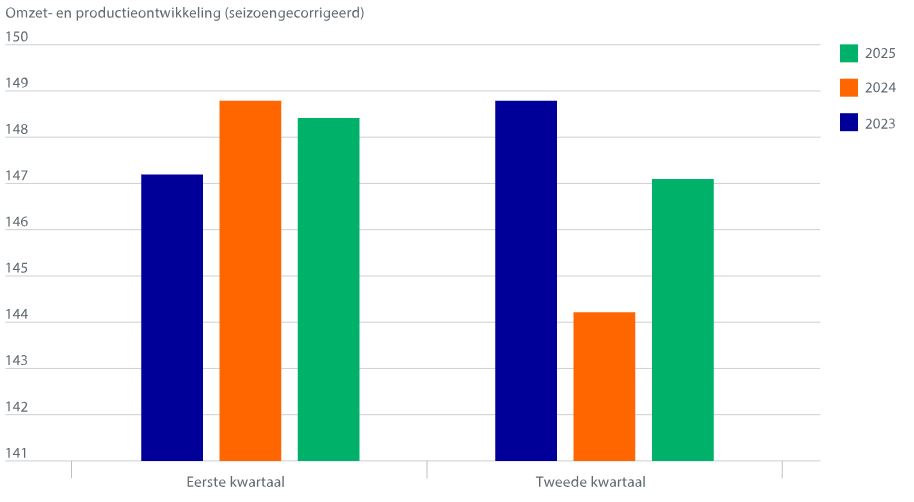
The holiday parks and campsites subsector saw a somewhat weak start to 2025. However, this was more than offset in the second quarter. The beautiful weather led to positive developments in occupancy and revenue, which grew by almost 6%. The summer was also good, despite the changeable weather. However, (foreign) tourists appear to be more cautious with their other spending due to the increased prices.
Tourism grew faster than the economy
Tourism in the Netherlands has developed strongly in recent years and has almost fully recovered from the impact of the coronavirus pandemic in 2024. According to Statistics Netherlands (CBS), Dutch and foreign tourists together spent over €111,2 billion in the Netherlands in 2024, an increase of almost €6 billion compared to 2023. Tourists from the Netherlands accounted for approximately two-thirds of total expenditure in 2024 (€67,3 billion).
Foreign tourists spent €38,2 billion, a growth of over 5% compared to the previous year (adjusted for price changes, over 10% without adjustment, ed.). Although domestic tourism remains dominant, the share of foreign visitors is growing faster, and this group has become more important for spending in hotels, holiday parks, and restaurants. They are responsible for more than half of the increase in total spending. This trend was already evident before the coronavirus period, but it has only intensified.
The added value of tourism to the Dutch economy has also increased. In 2024, it amounted to €40 billion. This increased tourism's share of gross domestic product (GDP) to 4%, compared to 3,9% in 2023. This means that tourism is growing faster than the total economy, although this difference was larger before the coronavirus period.
Higher personnel costs are the biggest challenge for the hospitality industry
Staff and purchasing are the largest cost items in the hospitality industry. These costs are also rising sharply after the coronavirus pandemic. Purchasing costs are rising due to inflation, and staff costs are rising even faster due to the tight labor market and the minimum wage increase.
Collectively agreed-upon wages have risen by 25,1% since 2020. This percentage is higher for actual wages due to a tight labor market and the fact that businesses are increasing wages faster than the collective bargaining agreement. As a result, not only are personnel costs rising significantly in absolute terms, but the percentage of wage costs relative to turnover is also increasing.
Before the coronavirus pandemic, staff costs at restaurants were 30 to 33% of revenue, but now they represent 36 to 40%. While purchasing price increases can generally be easily passed on to customers, the situation with staff costs is clearly different. Higher staff costs are increasingly putting pressure on margins. Hospitality businesses can reduce these costs by working more efficiently. This can be achieved, for example, through technological adjustments, such as the use of artificial intelligence (AI). Increasing prices on busy nights (dynamic pricing) can also improve margins.
Staff shortages reduced, but still significant
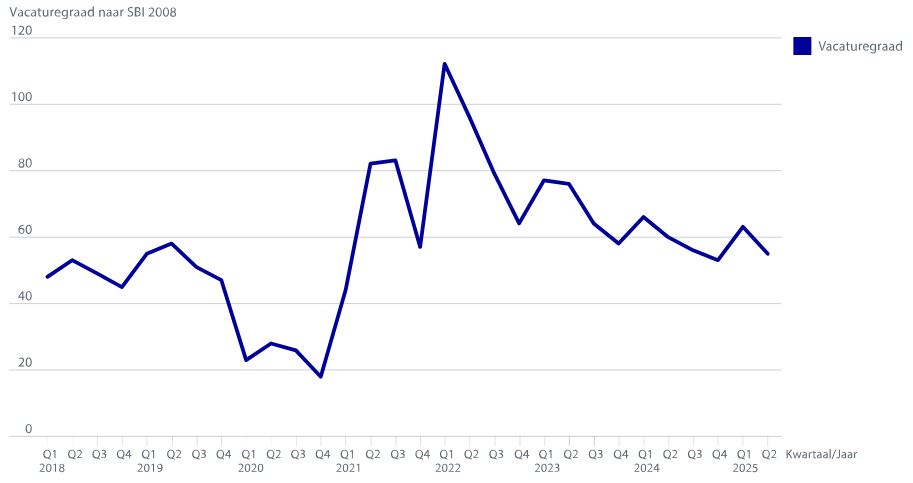
As mentioned earlier, the increased personnel costs are driven by, among other things, the tight labor market. Although the situation appears to be improving, the vacancy rate remains high compared to other sectors (see Figure 2). Historically, the number of vacancies per 1000 jobs can also be considered high. The current situation is comparable to 2019, when the vacancy rate was also around 55. However, it represents a halving of the situation just after the coronavirus period in the first quarter of 2022.
Staffing will be the biggest challenge: scarce, expensive, and difficult to pass on. Businesses must stay vigilant about cost control to protect margins.
More information: rabobank.nl/personeelskosten-zetten-marges-in-horeca-onder-druk
With thanks to: Jos Klerx, Sector Manager Hospitality, Recreation and Tourism at Rabobank.