The Railway Museum is one of the most popular museums outside the capital, with 437.000 visitors in 2024. Despite these impressive attendance figures, the museum has struggled to balance its budget in recent years. While the museum has profiled itself in recent years as a mix of entertainment and museum, it is now returning to its role as a museum, as this allows it to access more funds.
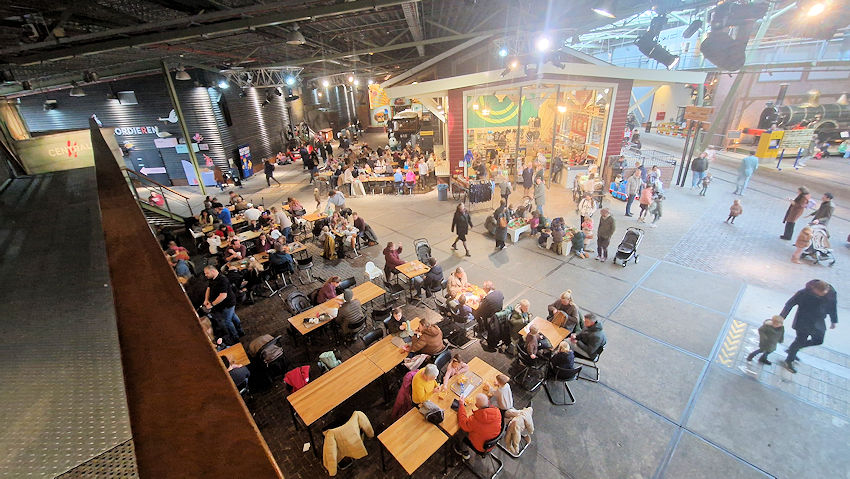
To avoid bankruptcy, several drastic measures are being taken. For example, ten staff members were recently laid off, and the daily (labor-intensive) museum show is being discontinued. The collaboration with the organization "Friends of the Museum" was also terminated because the cost-benefit analysis there also came out negative.
Less recreation – more museum
The Railway Museum has successfully maintained its independence over the past decades, with only limited additional sources of income. This was achieved thanks to a strong focus on public activities aimed at increasing visitor numbers and on business events. Consequently, there was less attention for core museum tasks. More attention is now needed for education, fundraising, public participation, staff development, and the structural maintenance of the collection and the building. Expenses have also risen in recent years, and investments have been postponed to avoid costs. This requires a necessary catch-up effort in the coming years.
Subsidies available for museum tasks
A different fundraising approach is part of the changes. Operating the current museum and realizing its future plans requires significant funding. This necessitates new and different fundraising methods. Funding is primarily allocated to typical museum tasks. This requires an explanation, which we also received from the management:
Can you give an example of subsidies that you are no longer eligible for if you focus too much on the recreational segment?
This includes subsidies for collection maintenance, education, programming, and participation. It all starts with embedding fundraising and development within the museum's organizational structure. This is essential to identify and capitalize on the many opportunities available. Whether it's government subsidies, corporate sponsorship, or cultural fund allocations, institutions must meet social objectives. This is a development that began many years ago in the cultural sector. Because the Railway Museum previously didn't apply for a subsidy and barely tapped into other third-party funding streams, this external stimulus and development was missed. To become future-proof, catching up on a museum's core tasks—preservation and management of heritage, education, and presentation—is essential. This development isn't solely driven by subsidies. We are a museum and want to organize ourselves accordingly. We will remain the entry-level museum for the entire Netherlands, but in the future, the public and partners will also be able to find more in-depth content with us.
management of the Railway Museum
Is it true that you currently generate a relatively large portion of your budget from your own resources (tickets, catering, and business events) compared to other museums?
Certainly, unlike most other museums, and certainly museums of this size, we generate virtually all of our income ourselves and receive no government support . Costs have risen enormously in recent years, and we cannot bear those burdens ourselves. The Railway Museum has therefore been operating at a loss for several years. Doing nothing is therefore not an option. The task for the current director is, consequently, to catch up and establish a future-proof Railway Museum that is financially sound.
management of the Railway Museum
Will the share of subsidies and fundraising increase after the reorganization? (compared to the current situation)
There are never any guarantees for subsidies, and building relationships with donors takes time. However, we do know that doing nothing is a dead end. That's why, with this reorganization, we're investing in the museum's museum development quality. There are ample opportunities to share rail sector stories and innovations with the public and partners.
management of the Railway Museum
In 2003, under the leadership of then-director Paul van Vlijmen, the Railway Museum in Utrecht underwent a major conceptual overhaul, increasing its appeal and introducing attractions. The more recreational approach was based on a meticulous "education through entertainment" philosophy. At the time, it was a revolutionary new approach, partly driven by the government's desire to reduce its reliance on subsidies and generate more internal resources. The current new direction partially reverses this more recreational approach. The Railway Museum remains a highly popular museum in Utrecht, attracting many families with young children in particular. (personal observation on February 21, 2026)
explanation Pretwerk.nl
More information: Railway Museum starts necessary renovation – Railway Museum